A CDL School’s 5 Keys to Truck Driver Training Success
Every CDL training class looks a little different. Some have students who have driven for years and want a better-paying career. Others have students who haven’t sat behind the wheel of a big truck before. By the end of training, though, the students who succeed tend to have a lot in common.
Here at Georgia Driving Academy, we’ve seen what works across many classes at our campuses in Conyers, Columbus, and Augusta. Our CDL training programs teach the skills it takes to pass the CDL exam, but the habits that students build along the way help them turn those skills into a lasting career.
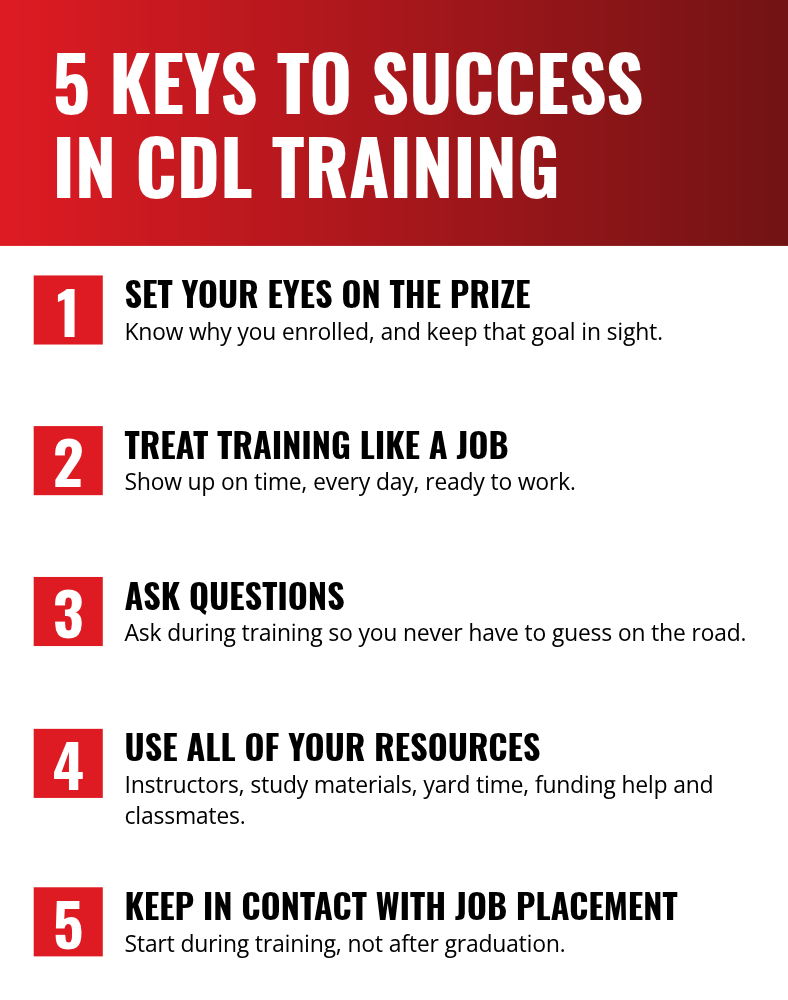
Here are the five most important keys to success that we see in the students who get the most out of truck driver training.
Key 1: Set Your Eyes on the Prize
Students who finish strong know why they enrolled. Maybe it’s for steady pay, a career to support a family, or a job that lets them see the country. No matter the student’s specific reason, that reason is the prize. Keeping it in sight makes the tough days easier to get through.
Training can get frustrating at times. Backing drills usually take many tries before they feel natural, and the pre-trip inspection has a long list of parts to learn by heart. Students who remember their goal see these moments as challenges to overcome, not reasons to quit.
We encourage students to set a clear goal going into day one. That could mean picking a type of job, such as over-the-road driving with a Class A CDL or local routes with a Class B CDL. It could also mean naming a target date for starting a first job. Whatever it is, a student’s specific goal gives every lesson purpose.
Key 2: Treat Training Like a Job
CDL school is the first step of a trucking career, so we ask students to treat it like their first job in the industry. That means showing up on time, every day, ready to work. Carriers place a high value on drivers they can count on. A student who builds that habit in school brings it straight to the first job.
Treating training like a job also means taking safety rules and instructor feedback seriously. On the job, a driver answers to dispatchers, safety managers, and customers. In training, instructors fill a similar role. Students who respond well to feedback now will be better prepared for the workplace later.
Successful students also plan around training like it’s a job. Students should line up childcare, transportation, and time off from other work before training begins. Checking upcoming class starts early gives students time to sort out these details.
Key 3: Ask Questions
No student knows everything on day one, and we don’t expect them to. The students who learn the fastest are often the ones who ask the most questions. If a step in the pre-trip inspection is unclear, or a backing maneuver keeps going wrong, the best move is to ask for help.
Some students stay quiet because they worry a question will sound too basic. We would much rather answer a simple question in the training yard than have a new driver guess on a busy highway. Our instructors are there to explain things as many times as it takes for them to click.
Good questions also reach beyond driving skills. Students can ask about which CDL endorsements might help them get hired, or what to expect at the DOT physical. The more students understand about the industry, the more confident they’ll feel when their careers begin.
Key 4: Use All of Your Resources
CDL students have more help available than many realize. Classroom lessons, study materials, practice time in the yard, and one-on-one time with instructors all play a part. Students who use every one of these tools tend to feel more prepared on test day than those who rely on class time alone.
Resources also include help with the cost of school. Our admissions team can walk students through tuition assistance, veterans’ benefits, and sponsored CDL training. When funding their training is handled up front, students can fully focus on learning.
Finally, classmates are a resource too. Students can quiz each other on pre-trip parts, share tips on backing, and keep each other motivated. Many of the connections students make last well after graduation, which helps in an industry where drivers often share job leads and advice.
Key 5: Keep in Contact With Your Job Placement Team
Earning a CDL is the goal of training, but landing a driving job is the goal of a career. That is where our job placement team comes in. This team works with carriers that hire new graduates and helps students find openings that match their goals.
Students get the most out of job placement when they stay in touch. That means answering calls and emails, keeping contact information up to date, and being clear about the kind of work they want. A student who shares preferences on pay, home time, or route type makes it easier for the team to point them toward the right carriers. A student who goes quiet may miss out on openings.
The best time to start working with the job placement team is during training, not after graduation. Carriers often begin the hiring process before a student finishes school. Students who connect with job placement early give themselves more time to compare offers and make a smart choice for their first job.
Start Your Path to Trucking Success
A successful trucking career starts long before the first paycheck. Students who keep their goal in sight, treat training like a job, ask questions, use every resource, and stay in touch with job placement give themselves the best chance to thrive after graduation.
Here at GDA, we build our training around student success. Ready to take the first step? Get started online or contact an admissions advisor today.
FAQ
Do I need driving experience to succeed in CDL training?
No. Many of our students start with no experience driving a commercial vehicle, and training covers the skills from the ground up.
Is CDL training overwhelming?
No. Although some students feel overwhelmed in the first weeks, it fades with practice and help from instructors.
How much should I study outside of CDL training?
There is no set number of hours, but a short review each day works better than cramming before a test. Students who struggle with a topic should ask an instructor where to focus.
Can I try again if I fail a CDL test the first time?
Yes. Students who do not pass a part of the CDL exam can retest, and instructors can help them target the skills that need work.
When should I start talking to my job placement team?
During training. Starting early gives students more time to learn about carriers and compare job offers before graduation.
Does my attendance in CDL school matter to employers?
Yes. Carriers look for reliable drivers, and a strong attendance record shows a student is ready to show up for the job.