Blake’s Journey to Becoming an Owner-Operator
From GDA Graduate to Small Fleet Owner
The road from company driver to running your own trucking business holds surprises most people never see coming. Blake Scott learned this during his journey from school bus driver to fleet owner.
His story shows the reality that comes with becoming an owner-operator in trucking. Finding insurance, managing drivers, and picking freight lanes that make money. Many drivers dream of owning their own operation, but few understand what that success actually requires.
Blake’s experience answers the question every driver asks: is becoming an owner-operator worth it? His path through GDA and beyond offers answers for anyone considering this as a career path. You’ll see what worked, and why some decisions matter more than others.
Blake Scott’s Background and Path to Trucking
Growing Up Around the Trucking Industry
Blake graduated high school in 1998 already familiar with the trucking industry. His father worked as an operations director for a small trucking company in South Carolina, so Blake grew up around the conversations, the decisions, and the daily realities of the business long before he ever held a commercial license.
That background gave him a sense of the industry that most people do not get until they are already on the road.
From College Student to School Bus Driver
While attending Gainesville College, Blake ran into an old high school friend and his family in town. His friend’s father ran transportation for Hall County school buses. The conversation that day led to a simple offer: come drive a school bus between classes. Four hours a day, steady pay, flexible hours. Blake got his Class B license and started driving buses at 19.
It was an unusual hire for someone that young, but the setup worked well for a college student who needed income without a rigid schedule.
Getting his Class A at Georgia Driving Academy
By 2005, Blake was ready to see what else was out there. He mentioned to a fellow school bus driver named Jack that he was thinking about getting his Class A CDL. Jack asked if they could train together. The two became weekend warriors, attending classes at Georgia Driving Academy while keeping their bus driving jobs during the week.
The Conyers campus had a dirt lot and old trucks back then, but Blake and Jack had a good time. On the first day of class, the instructor asked if anyone had commercial vehicle experience. Blake and Jack were the only two who raised their hands.
The instructor pulled them into the hallway. “Forget what you learned,” he told them. “Don’t confuse these people.” They understood. It would not have been fair to their classmates to show off what they already knew. Later, when the shifting exercises started, the instructor caught Blake floating gears. Blake was not sure how to respond. The instructor told him to be honest, and Blake explained he’d double-clutch for the test. The instructor laughed: “Blake. You know too much.”
The two finished their CDL training and went looking for work together.
First Steps in Commercial Trucking
Landing Their First Trucking Job
After graduation, the big carriers came in to recruit. They painted a bright picture, but the idea of being away from home for two weeks at a stretch did not appeal to Blake or Jack. Every other classmate signed on with a major carrier. Blake and Jack did not.
Since they were still driving school buses, they had the luxury of waiting. Blake found a posting on TruckPaper.com from a small owner with five trucks who needed a team driver. Blake called and told him he already had a team. The owner asked if that was a problem. Blake said no. “It ain’t for me if it ain’t for you,” the owner replied.
The two started running a dedicated route from Ellenwood, Georgia to West Palm Beach, Florida. Five loads a week, drop-and-hook, team driving. Blake drove 10 hours, Jack drove 10 hours. Simple and steady.
Unfortunately, it did not last forever. The owner started making good money and then managed it poorly, buying trucks he could not staff and cutting Blake and Jack’s pay to cover the cost. Eventually there was nothing left to do. Blake and Jack went back to driving buses.
Building Experience and Becoming an Owner Operator Truck Driver
Side Driving Jobs While Working Other Careers
While Jack eventually retired from bus driving, Blake went a different direction. But he kept his CDL active and stayed connected to trucking in a quieter way, stepping in to help friends who owned trucks whenever a driver called in sick. Those fill-in jobs kept his skills current even when trucking was not his main focus.
The Decision to Start a Trucking Company in 2021
In 2021, Blake and his wife decided to take another look at trucking. She had not been around during his driving days, so the reality of the lifestyle came as a surprise. Trucking does not follow a nine-to-five schedule, and it is not always easy on a household. Blake bought his first truck and started building something of his own.
His first experience running intermodal shipping containers to Savannah came with some expensive lessons. He learned what to avoid, and moved on.
Growing from One Truck to a Small Fleet
A friend from Blake’s funeral home days came into some money around that time. The two sat down, talked it through, and decided to partner up and grow together. Blake’s business partner, Rob, handles operations in the Gainesville area. The company now runs two divisions: hopper bottom freight and frozen chicken. They found a dedicated broker, locked in stable lanes, and have been building from there.

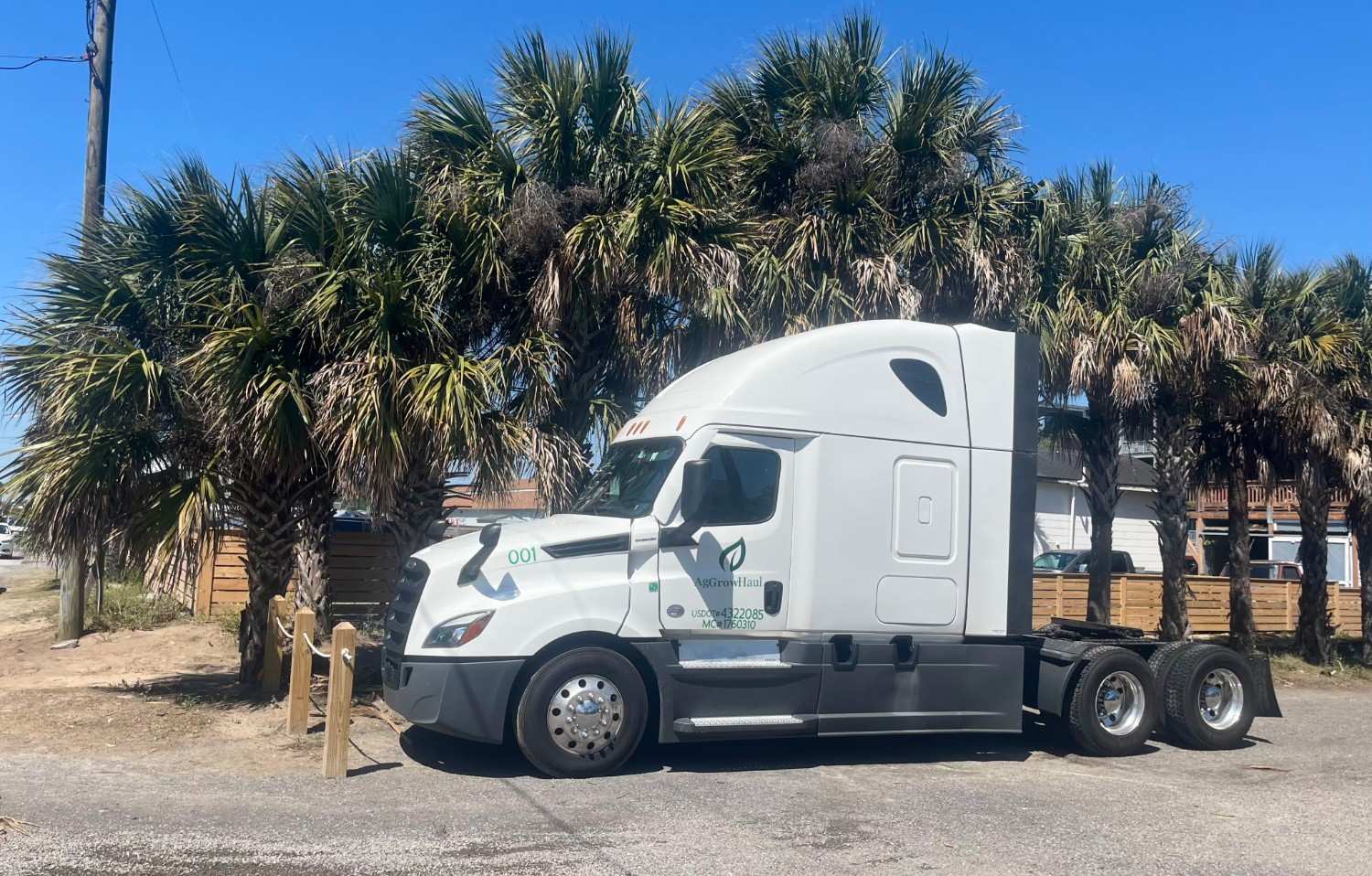
That company is AgGrowHaul INC., a northeast Georgia carrier Blake co-founded in 2024 with his partner Rob. The company specializes in agricultural and food-grade freight, serving farmers, producers, and suppliers across the region with refrigerated, hopper bottom, and dry van equipment.
The next chapter involves Amazon freight. Blake’s company pulled Amazon loads through another carrier a couple of years ago, and the drivers loved it. Amazon does not load a trailer over 18,000 pounds, which means lighter hauls and better fuel mileage. Blake’s 2015 International ProStar went from 7 miles per gallon to 11 to 12 miles per gallon pulling Amazon freight. The fuel savings alone made a strong case for pursuing it, and the company is set to haul Amazon on their own authority starting in June.
Giving Back the Same Opportunity He Got
As Blake has grown his fleet, one goal has stayed consistent: he wants to give new CDL graduates the same kind of chance that someone gave him back in 2005.
He wants to open the door to recent graduates who might otherwise feel like their only options are the big carriers.
Blake is straightforward about what that actually looks like right now. He has two seasoned over-the-road drivers who are willing to ride with new hires and help them get comfortable. He is in the process of adding trucks, and his Amazon contract will create more steady work as that ramps up. But he does not want to overstate it. He is not looking for 20 drivers at once. He is building carefully, and he wants the right people in the right trucks at the right time.
What Blakes Journey Shows Us
Blake’s path from school bus driver to fleet owner did not follow a straight line. There were years off, career changes, and a few different turns along the way. What stands out is that he kept his license, stayed connected to the industry, and eventually found an opportunity that fit his life and his goals.
For drivers who are just finishing CDL training and wondering what comes next, his story is worth paying attention to. Not everyone is looking for an OTR run that keeps them away from home for weeks at a time. GDA’s job placement assistance connects graduates with carriers offering local and regional routes. There are owner-operators out there building smaller fleets with local and regional routes, and some of them are actively looking for people who are willing to learn and grow alongside the business.
Blake Scott is one of them.